DIY Spray Foam: Kits, Costs, and When to Hire
DIY spray foam kits genuinely work for small gaps and rim joists. Here's what kits cost, what they cover, where DIY beats a contractor, and where it doesn't.
DIY spray foam kits are a real option — not a gimmick. For sealing rim joists, filling pipe penetrations, or patching a missed section of attic insulation, a two-component kit from a building supply house gives you results that hold up for decades. The catch is that the economics only favor DIY within a narrow scope.
Before you buy anything, [estimate your project cost](/spray-foam-insulation-cost-calculator) against what a contractor would charge for the same area. The crossover point is closer than most people expect.
What's in a Two-Component Spray Foam Kit?
Two-component (2K) kits ship with two pressurized cylinders. One holds the "A" side — isocyanate, typically MDI (methylene diphenyl diisocyanate). The other holds the "B" side — a polyol resin blend. When you pull the trigger, both chemicals travel through separate hoses into a mixing tip where they combine and react on contact with the surface.
The reaction is exothermic. It generates real heat during cure, which is why you can't spray more than 1.5–2 inches of closed-cell in a single pass — the interior temperature builds up and can char the foam core. That's a documented fire hazard, not just poor technique.
Most kits include a gun applicator, 15–20 single-use mixing nozzles, two hoses, and the two canisters. The nozzles are single-use: once you stop spraying for more than 20–30 seconds, the mixed material cures inside the tip and plugs it. Keep a pile of spares within reach and swap proactively. A clogged tip midway through a pass wastes material and creates seams.
The gun and hoses are reusable across kits from the same manufacturer. A decent kit gun also lets you adjust the spray pattern — wide fan for covering wall surfaces, narrow stream for filling deep cavities.
DIY Spray Foam Kit Sizes and Coverage
Kit sizes are rated in board feet (BF). One board foot = 1 square foot of coverage at 1 inch thick.
| Kit Size | Board Feet | Coverage at 2" | Coverage at 3" | Retail Price |
|----------|-----------|----------------|----------------|--------------|
| Small | 200 BF | ~85 sq ft | ~57 sq ft | $120–$160 |
| Medium | 600 BF | ~250 sq ft | ~170 sq ft | $320–$420 |
| Large | 1,200 BF | ~500 sq ft | ~340 sq ft | $650–$820 |
Real-world yield runs 15–25% below the rated board footage. Manufacturer ratings assume ideal temperature, perfect technique, and zero waste from nozzle swaps. In practice, plan on 80% yield at best.
**Worked example:** A 1,500 sq ft basement rim joist at 3 inches of closed-cell needs 4,500 BF. That's roughly four large (1,200 BF) kits at $700 each — $2,800 in materials alone. A contractor doing the same job with commercial equipment would charge $1,500–$2,250 installed. The DIY route costs more at this scale.
For a 120 sq ft rim joist section (a partial basement or single wall), one medium 600 BF kit at $370 handles it at 3 inches with material left over. Contractor minimum charges in most markets run $300–$500 even for tiny jobs. At that size, DIY wins on cost.
Safety Requirements: Don't Skip These
This is the section that separates successful DIY foam jobs from costly disasters. The isocyanate component of 2K spray foam is a known respiratory sensitizer. Once you're sensitized — meaning your immune system has had a significant exposure — even tiny future exposures can trigger asthmatic reactions that don't resolve. This isn't rare: the EPA's Safer Choice team has documented occupational sensitization cases among applicators who didn't use proper PPE.
The EPA and OSHA's two-component SPF advisory requires, at minimum:
- **The space evacuated** and ventilated for a minimum of 24 hours after application
If you're doing a genuinely small patch job (under 15 board feet), a full-face organic vapor plus P100 cartridge respirator and coveralls are the practical minimum. For anything larger, don't substitute.
SAR units can be rented from larger tool rental shops for $40–$80 per day. Coveralls, gloves, and goggles add $30–$50. Budget $80–$130 in safety gear even for a single kit job.
When DIY Makes Sense (and When It Doesn't)
**DIY works well here:**
- Rim joist sealing under 300 sq ft (easy access, single-height surface)
- Sealing penetrations — pipes, wires, conduit through top plates and sill plates
- Small attic hatch insulation boards
- Band joist sections in unfinished basements
- Filling voids left by a previous foam job
**Hire a contractor instead when:**
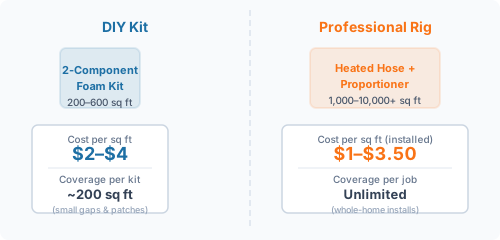
- Total surface area exceeds 300–400 sq ft — kit cost-per-board-foot is roughly 3× higher than contractor material cost
- You need 4+ inches of closed-cell — multiple passes and careful heat management are required
- The area is hard to ventilate (enclosed attic space with no cross-ventilation)
- The project requires a building permit — code inspectors expect licensed SPF applicators on permitted work
- You're doing a full crawl space encapsulation — moisture variables are complex and errors are expensive to remediate
For a crawl space job over 500 sq ft, read through the [spray foam crawl space guide](/spray-foam-crawl-space) before committing either way. The specifics of conditioned vs. vented designs matter for what product and thickness you choose.
DIY Kit Cost vs Contractor Price: Real Comparison
Let's run three concrete scenarios:
**Job 1: 100 sq ft rim joist, 2 inches closed-cell**
- DIY: 1 medium kit at $370 + gear ($80) = **$450**
- Contractor: $200–$300 (if they'll take a job this small) plus possible minimum charge = **$300–$500**
- Winner: roughly even; DIY wins if you already own safety gear
**Job 2: 400 sq ft basement rim joist, 3 inches closed-cell**
- DIY: 3 medium kits at $370 each ($1,110) + gear ($80) = **$1,190**
- Contractor: 400 sq ft × $2.25/sq ft installed = **$900**
- Winner: contractor — clearly cheaper and faster
**Job 3: Sealing 25 pipe penetrations, no square footage**
- DIY: 1 small 200 BF kit at $140 + gear ($80) = **$220**, covers all 25 holes
- Contractor: minimum charge $300–$500 for a mobilization
- Winner: DIY — no contractor will take this at a fair price
The pattern is clear. DIY wins on very small, piecemeal work where contractor minimums don't apply. Contractors win at scale — their material cost is $0.80–$1.20 per board foot versus your retail cost of $2.00–$2.50 per board foot.
[See what your project will cost](/spray-foam-insulation-cost-calculator) across different square footages and foam types. The calculator makes the comparison fast.
Mistakes That Ruin DIY Spray Foam Jobs
**Cold chemicals.** Both cylinders must be at 65–80°F before you spray. A canister that sat in a 45°F garage overnight will spray off-ratio — the cold changes viscosity and the A/B blend at the tip skews. Warm your kits indoors for 12+ hours beforehand. Don't use hot water baths; rapid heating causes pressure spikes.
**Off-ratio foam.** If your foam feels sticky after 15 minutes, looks crumbly, or smells strongly chemical after 48 hours, the ratio was off. Off-ratio foam doesn't cure properly, loses R-value, and may continue off-gassing VOCs. Don't cover it — remove it and start over.
**Spraying too thick in one pass.** The maximum single-pass thickness for closed-cell is 1.5 to 2 inches. Thicker passes trap heat in the foam core, which can cause charring and in extreme cases ignition of adjacent materials. Apply in lifts and let each layer cool 10–15 minutes before adding the next.
**Reusing a tip after a pause.** Any break longer than 20 seconds and the tip is likely clogged. The cost of wasting a fresh tip ($2–$3) is far lower than the cost of stopping mid-pass with a plugged gun. Swap immediately.
**Skipping surface prep.** Spray foam bonds poorly to wet or cold surfaces. The substrate must be dry and above 50°F. Cold concrete in a January basement will cause adhesion failure even if your chemicals are warm.
For more detail on what goes wrong — and how much it costs to fix — check the full list in the [spray foam insulation mistakes guide](/spray-foam-insulation-mistakes).
The Bottom Line
DIY spray foam is a legitimate, cost-effective choice for small, accessible jobs where a contractor's minimum charge makes professional installation impractical. It's also a useful ongoing maintenance tool once you own the safety gear.
Above 300–400 sq ft, the math flips. Contractor material costs are a fraction of retail kit pricing, their equipment produces more consistent results, and they carry liability insurance if something goes wrong.
Know your square footage, run the numbers, and make the call with real data. [Get a free estimate](/spray-foam-insulation-cost-calculator) for your specific area and foam type before you buy your first kit or pick up the phone.
For context on how spray foam compares to fiberglass in the same applications, the [spray foam vs fiberglass guide](/spray-foam-vs-fiberglass-insulation) covers both cost and performance side by side.
Learn more about the team behind this calculator on our [about page](/about).